The Kurpark
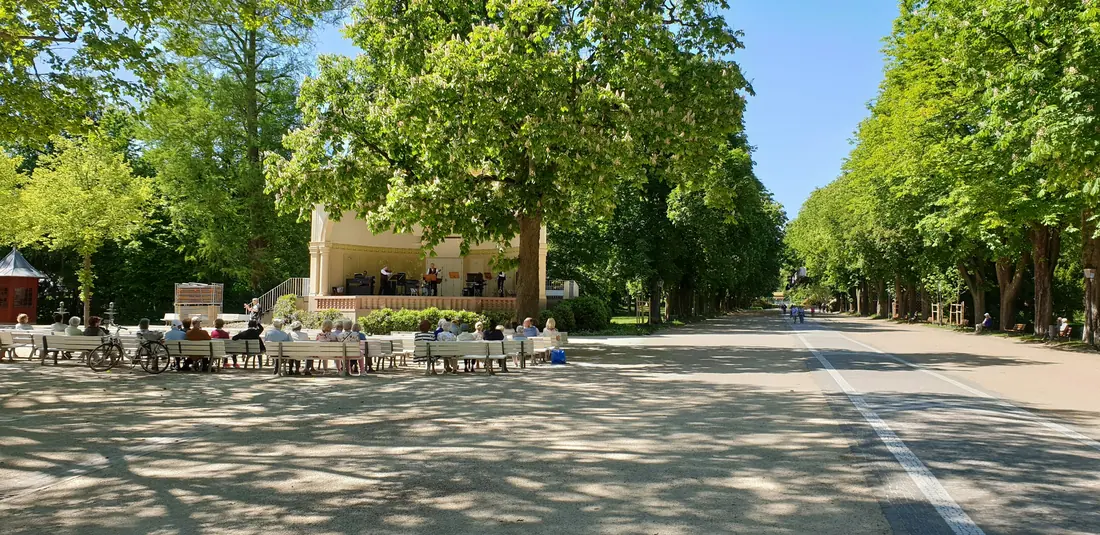
The casino stands in the Kurpark, which the city’s walking-tour leaflet puts at about 47 hectares (Wikipedia gives about 44). Six garden artists worked on it in the 19th and early 20th centuries; according to Wikipedia it is an English-style landscape park based on a design by Peter Joseph Lenné, and the leaflet adds that Lenné’s designs were realised from 1854 under Gustav Meyer.
What you pass on a walk
1843 · 1984
Kurhaus
First completed in 1843, partly burned after about 20 years and rebuilt in 1861–1863 by Jean Pierre Cluysenaar. Nearly destroyed in 1945, it was rebuilt in 1952 and replaced by the present building in 1984.
1887–1890
Kaiser-Wilhelms-Bad
Built in 1887–1890 to designs by Louis Jacobi, near the casino.
1914 · 2007
Thai Sala
A pavilion donated by King Chulalongkorn, who recovered in Bad Homburg in 1907, inaugurated in 1914. A second Sala in the Salzgrund was given for the centenary of his stay.
1896 · 1899
Allerheiligen-Kirche
The Russian Orthodox church designed by Louis Benois. Nicholas II laid the foundation stone in 1896, and it was consecrated three years later.
1844 · 2012
Orangerie
Built in 1844 for 40 orange trees, redesigned by Jacobi in 1908–1909 and reconstructed in 2011–2012. The Musikpavillon dates from 2012.
1983 · 1889
Gardens and golf
The Blindengarten of 1983 was the first of its kind in Germany. English guests played golf here from 1889, creating Germany’s oldest golf course.
The springs
The mineral springs made Homburg a spa. The leaflet lists the Ludwigsbrunnen (rediscovered 1809), the Elisabethenbrunnen (rediscovered 1834), the Kaiserbrunnen and Stahlbrunnen (both drilled or re-drilled in 1841), the Auguste-Viktoria-Brunnen, the Louisenbrunnen, the Landgrafenbrunnen, the Chulalongkornbrunnen (drilled 1907) and the Solesprudel, which was found again in 1899 and re-drilled in the early 1960s to a depth of 305 metres. A central tap at the Orangerie draws on four springs.
Wikipedia lists the Elisabethenbrunnen with its Monopteros among the town’s sights. Check with the city’s tourist office for current tapping arrangements before you go.
People and monuments
- Fyodor Dostoevsky, a frequent guest, is remembered by a sculpture by Nicolai Karlychanow from 2014.
- Friedrich Hölderlin lived in Homburg in 1798–1800 and 1804–1806. His memorial, donated in 1883, is the second-oldest Hölderlin monument in Germany.
- Peter Joseph Lenné (1789–1866), the landscape architect, has a memorial in the park.
- Shmuel Yosef Agnon lived in Homburg in 1921–1924 and received the Nobel Prize in Literature in 1966.
Bad Homburg vor der Höhe
Bad Homburg is the district town of the Hochtaunuskreis in Hesse and part of the Frankfurt Rhine-Main region. It had 55,995 inhabitants on 31 December 2023, according to Wikipedia, and lies between 137 and 250 metres above sea level. The first documentary mention dates from around 1180. “Die Höhe” is the traditional name of the Taunus; the prefix “Bad” was permitted in 1912.
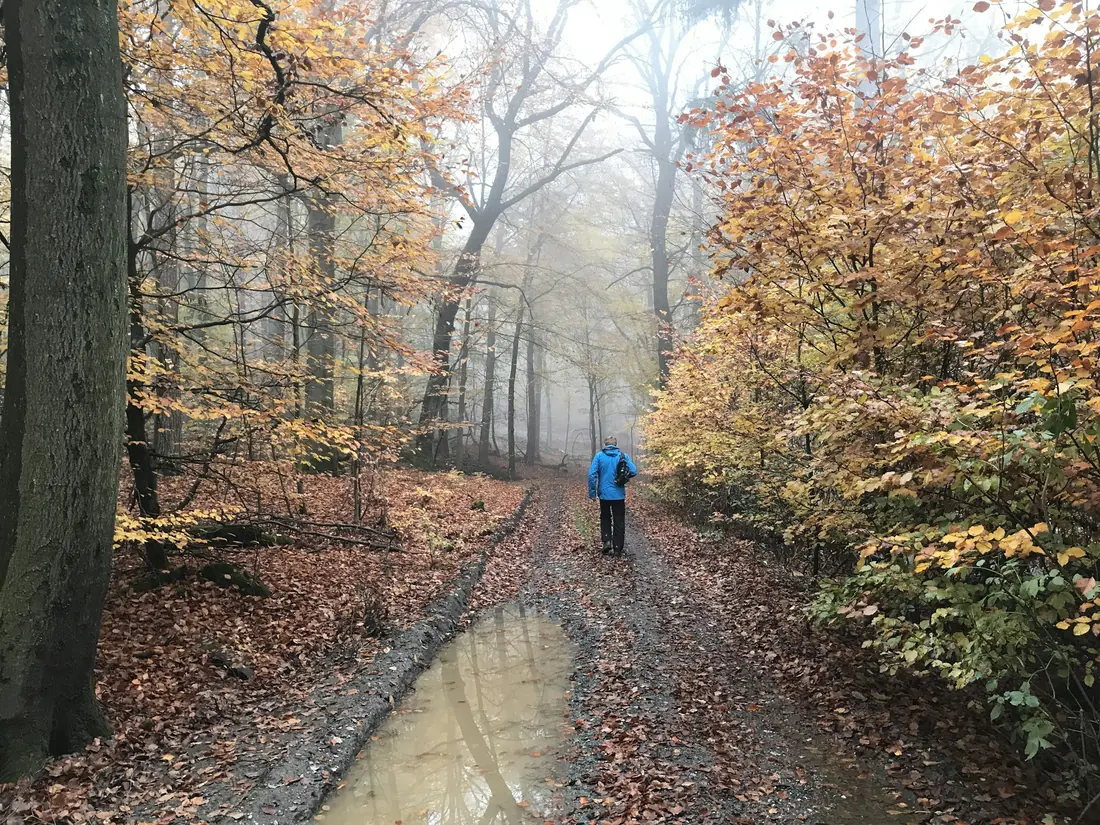
Not Hamburg: despite what this website’s name might suggest, Bad Homburg is a town in Hesse next to Frankfurt, not the port city of Hamburg.
Schloss Bad Homburg
The castle was the residence of the Landgraves of Hessen-Homburg from 1622. Its Weißer Turm, a round keep built in the third quarter of the 14th century, is 48.11 metres tall and the town’s landmark. From 1866 the castle served as a summer residence of the Prussian kings and German emperors, and Wilhelm II used it often. Today it is a museum castle with guided tours; the Königsflügel reopened on 1 September 2021 after a closure that began in February 2011.
Saalburg Roman fort
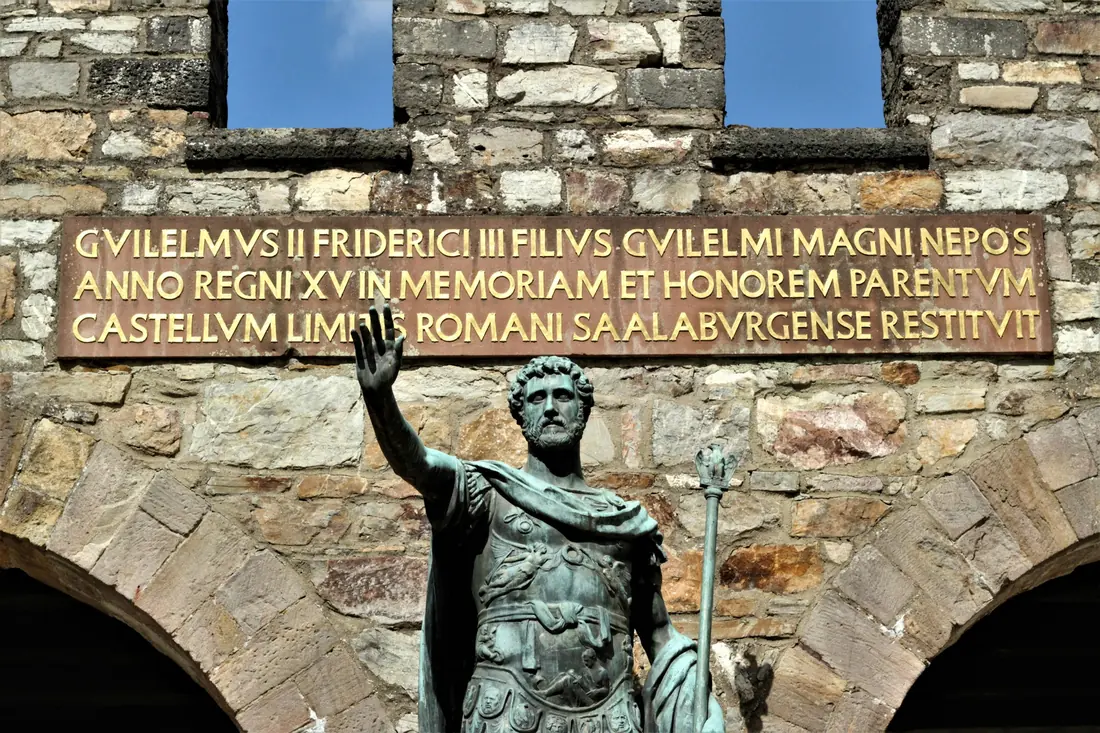
On the Taunus ridge north-west of Bad Homburg lies the Saalburg, a cohort fort on the Upper German-Raetian Limes, which is a UNESCO World Heritage Site (2005). Wilhelm II commissioned its reconstruction: the foundation stone was laid on 11 October 1900. The Saalburgmuseum is part of the Archäologisches Landesmuseum Hessen.
The Herzbergturm
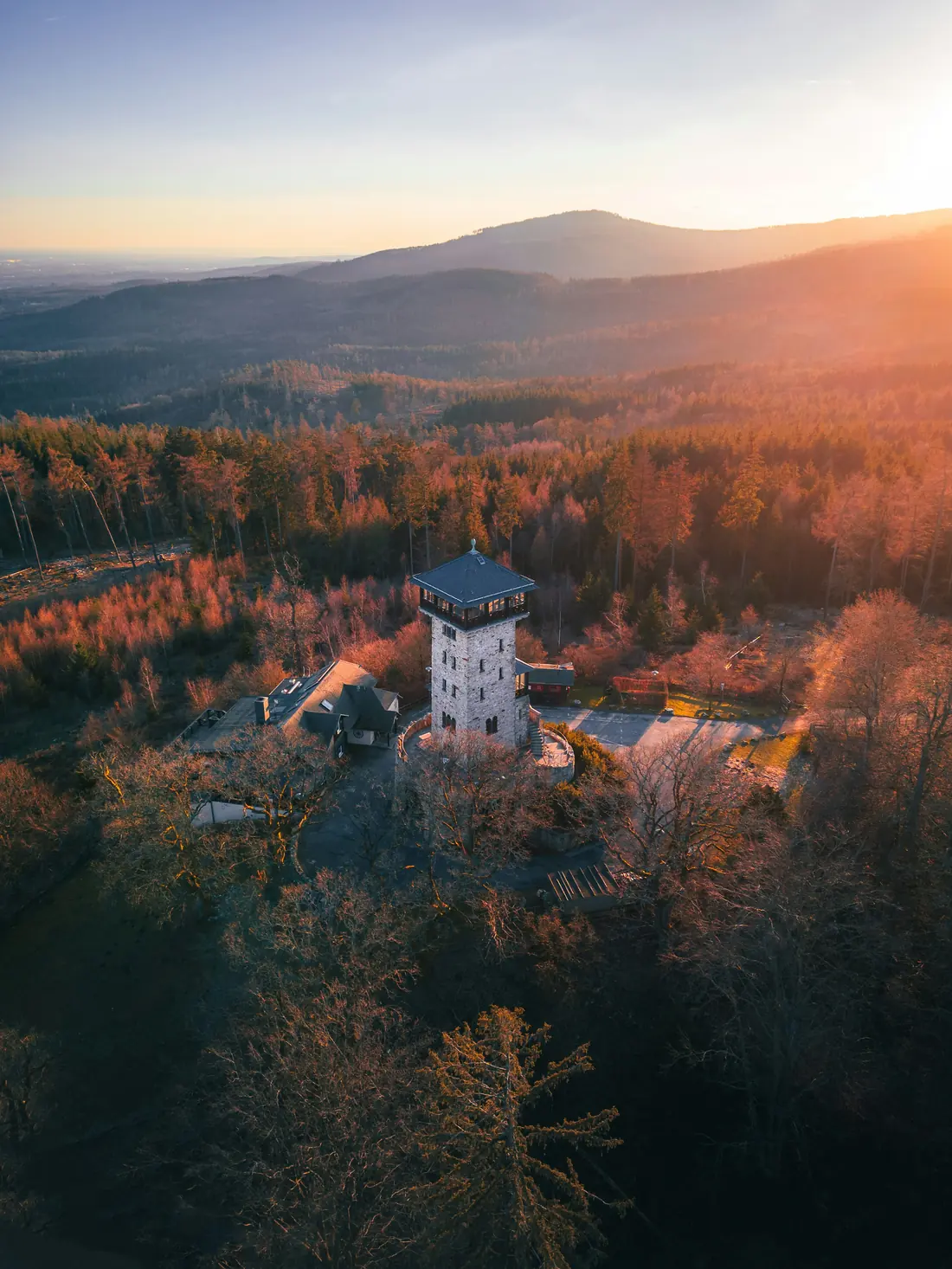
On the summit of the Herzberg (591.4 metres) in the Dornholzhausen district stands a stone observation tower designed by Louis Jacobi and modelled on a Roman watchtower. It was inaugurated on 30 July 1911 and has 124 steps and a glazed viewing platform. After renovation it reopened on 8 December 2008. Access terms may have changed since: check before you go.